Final Live
Shriyas Year-End Reflection: From Code to Impact
June 2025
As AP Computer Science Principles wraps up, I’ve been reflecting on a year that transformed the way I see coding — not just as a technical skill, but as a creative tool to build solutions that intersect with health, security, and education. I explored full-stack development, dove into real-world machine learning, and led technical teams at a national level — all while learning how to design with clarity, purpose, and impact.
Credentials
| Credential Type | Title | Details |
|---|---|---|
| Certificate | Tools Basics | Covered foundational dev tools like GitHub, GitPod, and terminal basics. |
| Certificate | JavaScript Essentials | Gained experience in OOP and dynamic browser scripting for game logic. |
| Certificate | 2D Game Dev + OOP | Created a playable game structure using modular JavaScript. |
| Certificate | Data Analysis with Python | Applied Python to structure and interpret data for game scoring and logic. |
| Certificate | Deployment – Linux/Cyber Concepts | Deployed full-stack applications with a focus on security and scalability (AWS, HTTPS, JWT). |
| Certificate | API Development | Built and integrated checklist + food log impact APIs for glucoquest and Frostbyte. |
| NFT | Personalized Website NFT | Custom site deployment for both a national parks platform and DNA-based game. |
| NFT | 2D Game Design NFT | Game design + mechanics for glucoquest, integrating CS with science education. |
| NFT | Checklist NFT | Designed checklist UI/UX and logic for Frostbyte’s checklist system. |
| Portfolio | LinkedIn Account | Showcased project work, reflections, and team roles in a professional space. |
My Other CSP Blogs
| Title | Link |
|---|---|
| Beneficial / Harmful Effects | View Blog |
| Digital Divide | View Blog |
| Computing Bias | View Blog |
| Crowdsourcing | View Blog |
| Legal / Ethical Concerns | View Blog |
| Safe Computing | View Blog |
| Binary Search Algorithm | View Blog |
| Lists and Filtering Algorithm | View Blog |
| Big O and Algorithm Efficiency | View Blog |
| Undecideable Problems, Graphs + Heuristics | View Blog |
| Binary Base 2 Math + Logic Gates | View Blog |
| Color Codes/Images/Base64 | View Blog |
Unique Qualities I Bring
My biggest strength is interdisciplinary thinking — whether I’m building a health simulation app or training a cybersecurity team, I love connecting ideas across domains. I bring leadership through action: designing workshops, mentoring younger students, and coordinating complex projects. I’m also deeply driven by purpose — I choose to build tools that empower, educate, or protect others.
Showcasing Projects Publicly
In June 2025, I presented at Night at the Museum (N@tM), our school’s culminating showcase for CS students. There, I walked visitors through how my Glucose Impact Monitor works — demonstrating how machine learning can serve real people in real-time. I also explained how my Checklist App was developed from scratch and why thoughtful design choices make software feel intuitive. Sharing my work with parents, teachers, and peers helped me gain confidence in public speaking and technical storytelling.
Major Projects Overview
| Project | Description | Key Tech | My Role |
|---|---|---|---|
| Glucose Impact Monitor | Machine learning app that predicts blood sugar response to foods | scikit-learn, Flask, SQLite, pandas | Designed, trained, and deployed predictive model with full backend integration |
| Checklist App | Full-stack project for AP Create Task | Flask, HTML/CSS, SQLite | Created user-facing checklist tool with dynamic task logic and persistent storage |
| CyberAegis Team Leadership | National cybersecurity competition team (Top 1.4%) | Bash, forensic scripting, Windows logs | Team Captain & Windows Lead – MVP (2×), drill designer, and competition strategist |
Glucose Impact Monitor – AI for Real-World Health
This project began with a question: What if people could predict how a certain food would impact their blood sugar — instantly? I built a machine learning classifier that predicts glucose response levels (low/medium/high) based on nutritional input.
The model was trained using glycemic index data, processed in Python using pandas, built with scikit-learn, and deployed with a Flask API. It takes user food input and returns a glucose impact prediction.
What I Learned
- Data cleaning and model tuning
- API deployment with Flask
- Usability testing for real users
- Translating biology into data-driven insights
Checklist App – Simplicity Done Right
For my AP Create Task, I built a full-stack checklist app that tracks tasks across sessions. I used Flask for the backend, HTML/CSS for the frontend, and SQLite for storage.
What I Learned
- Full-stack communication (frontend to backend)
- Data validation and error handling
- Building tools that are simple, usable, and reliable
🎪 Showcasing Projects: Night at the Museum (June 2025)
One of the most rewarding parts of the year was presenting GlucoQuest at Night at the Museum (N@tM) in June 2025. This school-wide event gave students the chance to share their work with families, teachers, and industry professionals.
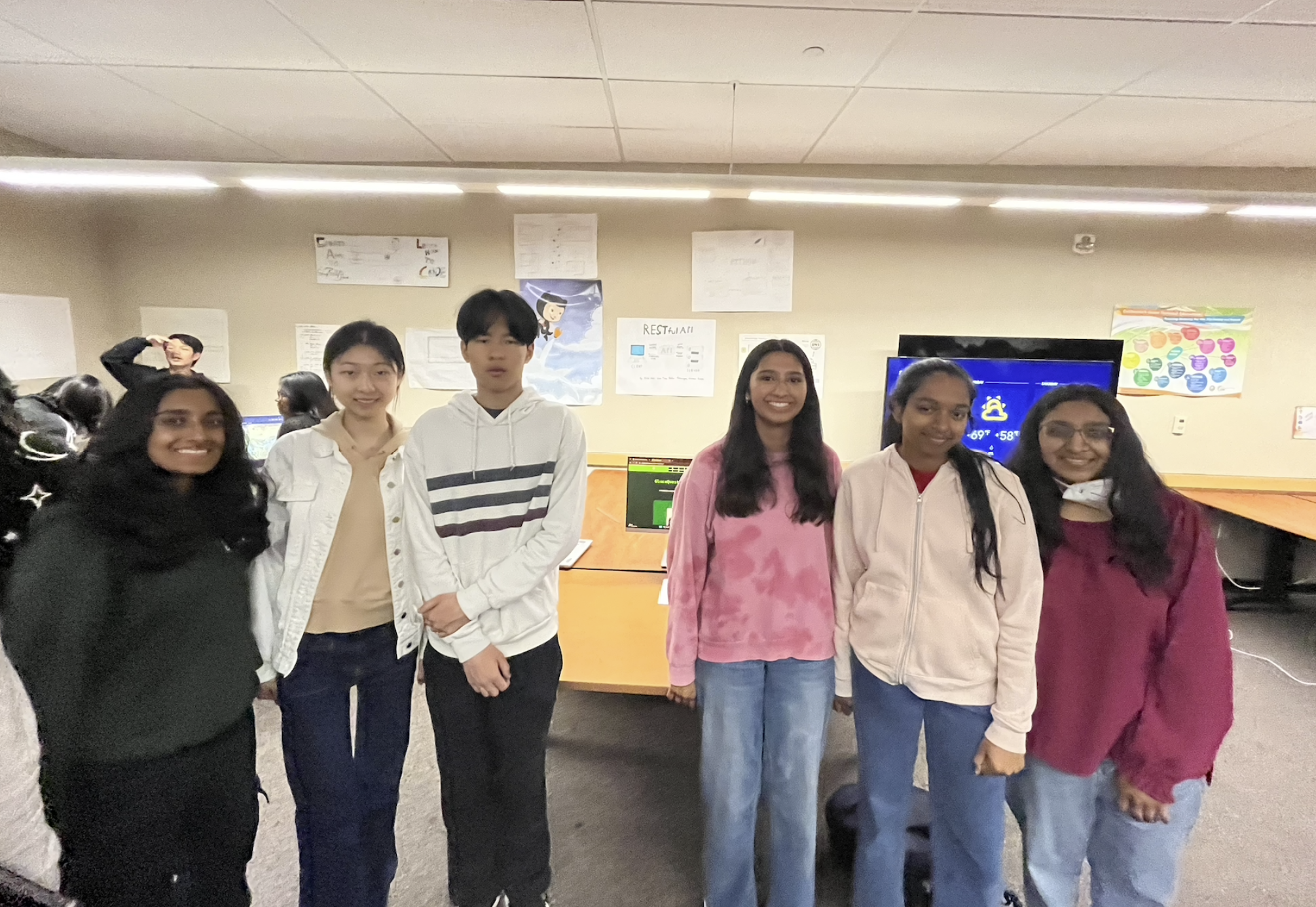
At my booth, I demonstrated both the core gameplay and the machine learning-based diabetes risk predictor.
I explained the technical challenges behind the project, including our use of
HTML/CSS, JavaScript, scikit-learn, and deployment tools.
I also walked visitors through the Perfect Plate leaderboard and our design thinking process.
What made this event especially meaningful was that I got to speak with former and current Dexcom employees. Some were impressed enough with our project that they offered to connect us to people at the Dexcom office for a possible visit. It felt more like a real networking event than just a school showcase.
Experiences like N@tM helped me improve my public speaking, technical presentation, and real-time demo skills. It was a great way to learn how to communicate ideas clearly to a non-technical audience while making real professional connections.
CyberAegis Team Leadership – Competition and Coaching
As captain and Windows lead for CyberAegis, I helped our team place in the top 1.4% nationwide. I earned MVP twice for leading drills, solving forensic challenges, and mentoring teammates in system defense.
What I Learned
- Leadership under pressure
- Technical forensic analysis
- Mentoring and teaching cyber defense skills
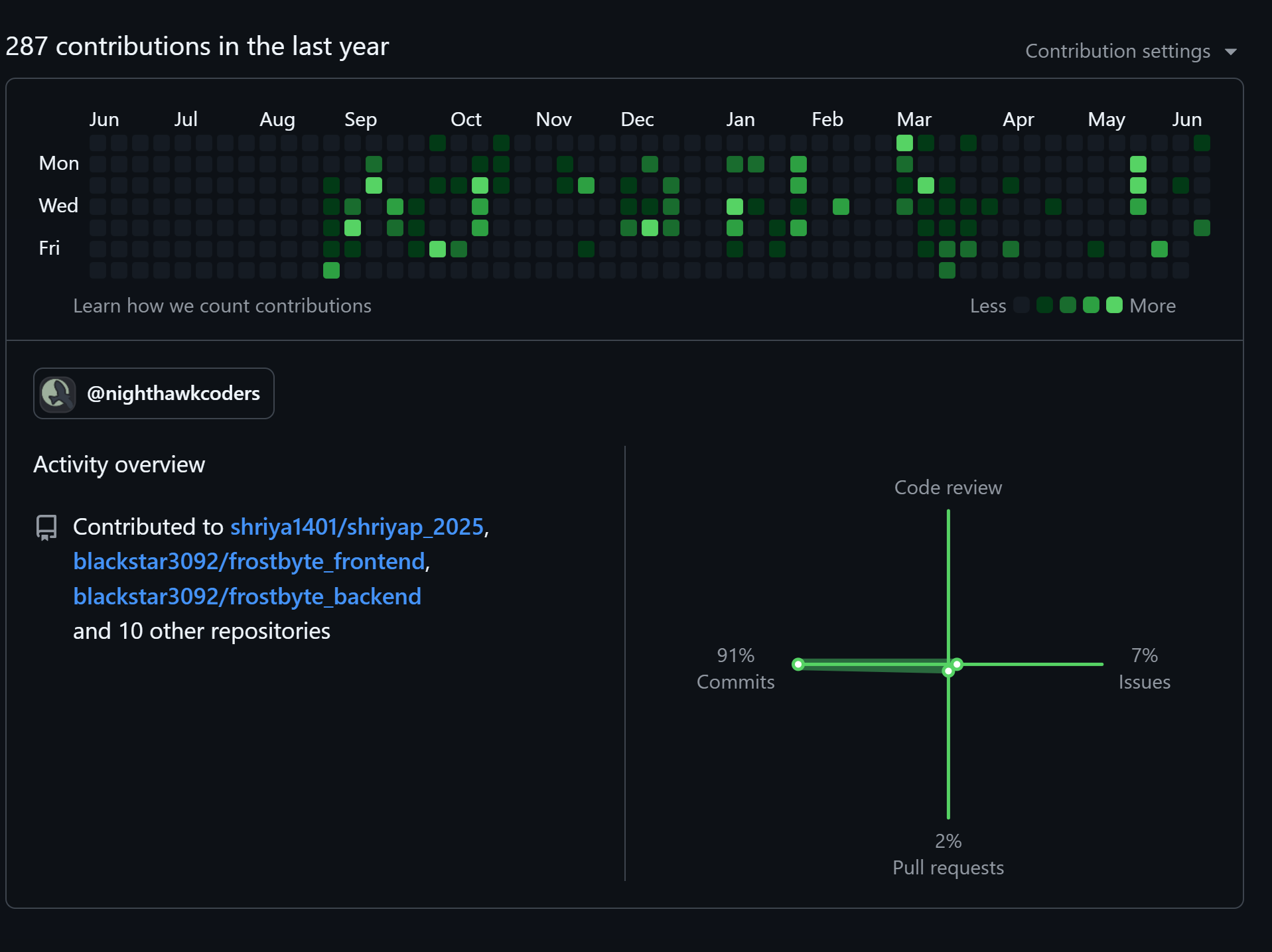
Commits
Overall Takeaways
- Build full-stack apps that solve real problems
- Apply machine learning to health and data science
- Lead teams with confidence and clarity
- Communicate complex systems in simple ways
Looking Ahead
I’m currently pursuing my Girl Scouts Gold Award — a project that combines AI, biology, and cybersecurity into one educational platform. This experience helped me realize that good code can create good impact — and I plan to keep building solutions that matter.
Final Thoughts
This year wasn’t just about learning code — it was about learning who I am as a builder, teammate, and creator. From APIs to algorithms to leadership, I’m excited to keep growing in all directions.