Digital Divide
%%js
function exploreDigitalDivide() {
  // Select what data to display
  const metric = prompt(
    "Which digital divide metric would you like to explore?\n" +
    "1: Income-based internet access\n" +
    "2: Urban vs rural access\n" +
    "3: Age-based internet usage\n" +
    "4: Global connectivity rates"
  );

  // Sample data
  const incomeData = {
    categories: ["Lowest 20%", "Second 20%", "Middle 20%", "Fourth 20%", "Highest 20%"],
    values: [62, 71, 80, 88, 95]
  };

  const locationData = {
    categories: ["Urban", "Rural"],
    values: [94, 83]
  };

  const ageData = {
    categories: ["18-29", "30-49", "50-64", "65+"],
    values: [97, 93, 88, 61]
  };

  const globalData = {
    categories: ["North America", "Europe", "Asia Pacific", "Latin America", "Middle East/Africa"],
    values: [90, 87, 54, 68, 40]
  };

  // Select dataset based on user choice
  let data;
  let title;

  switch(metric) {
    case "1":
      data = incomeData;
      title = "Internet Access by Income Level (%)";
      break;
    case "2":
      data = locationData;
      title = "Urban vs Rural Internet Access (%)";
      break;
    case "3":
      data = ageData;
      title = "Internet Usage by Age Group (%)";
      break;
    case "4":
      data = globalData;
      title = "Internet Access by Region (%)";
      break;
    default:
      alert("Invalid selection!");
      return;
  }

  // Display the data (in a real app, this would create a chart)
  console.log(title);
  console.log("=".repeat(title.length));

  const maxValue = Math.max(...data.values);
  const maxBarLength = 40;

  for (let i = 0; i < data.categories.length; i++) {
    const barLength = Math.round((data.values[i] / maxValue) * maxBarLength);
    const bar = "█".repeat(barLength);
    console.log(`${data.categories[i].padEnd(12)}: ${bar} ${data.values[i]}%`);
  }
}

// Run this function to explore different aspects of the digital divide
// exploreDigitalDivide();
<IPython.core.display.Javascript object>
%%js
function bridgeTheDivideGame() {
    console.log("===============================================");
    console.log("🌉 BRIDGE THE DIVIDE: Digital Inclusion Challenge");
    console.log("===============================================");
    console.log("You are a technology policy advisor tasked with");
    console.log("helping communities overcome the digital divide.");
    console.log("Analyze each scenario and make the best decision!\n");

    let score = 0;
    const totalQuestions = 5;

    // Scenario 1
    console.log("SCENARIO 1: Rural Connectivity");
    console.log("A rural community of 500 families is located 50 miles from");
    console.log("the nearest broadband infrastructure. You have $200,000");
    console.log("in funding. What's your best approach?");
    console.log("A: Lay fiber optic cable to each home");
    console.log("B: Set up a wireless tower system");
    console.log("C: Provide satellite internet subsidies");
    console.log("D: Create a community center with high-speed internet");

    const answer1 = prompt("Your choice (A/B/C/D):").toUpperCase();
    if (answer1 === "B") {
      console.log("✓ Correct! A wireless tower system provides the best");
      console.log("  coverage for the investment in this rural setting.");
      score++;
    } else {
      console.log("✗ The best answer is B. Fiber would be too expensive,");
      console.log("  satellite has high latency issues, and a single center");
      console.log("  wouldn't provide sufficient access for all families.");
    }


    console.log("\nSCENARIO 2: Digital Literacy");
    console.log("An urban neighborhood has new affordable internet access,");
    console.log("but adoption remains low at 30%. Investigation reveals many");
    console.log("residents lack digital skills. What approach would help most?");
    console.log("A: Reduce internet prices further");
    console.log("B: Distribute free tablets to all residents");
    console.log("C: Launch digital literacy workshops at local library");
    console.log("D: Create a tech support hotline");

    const answer2 = prompt("Your choice (A/B/C/D):").toUpperCase();
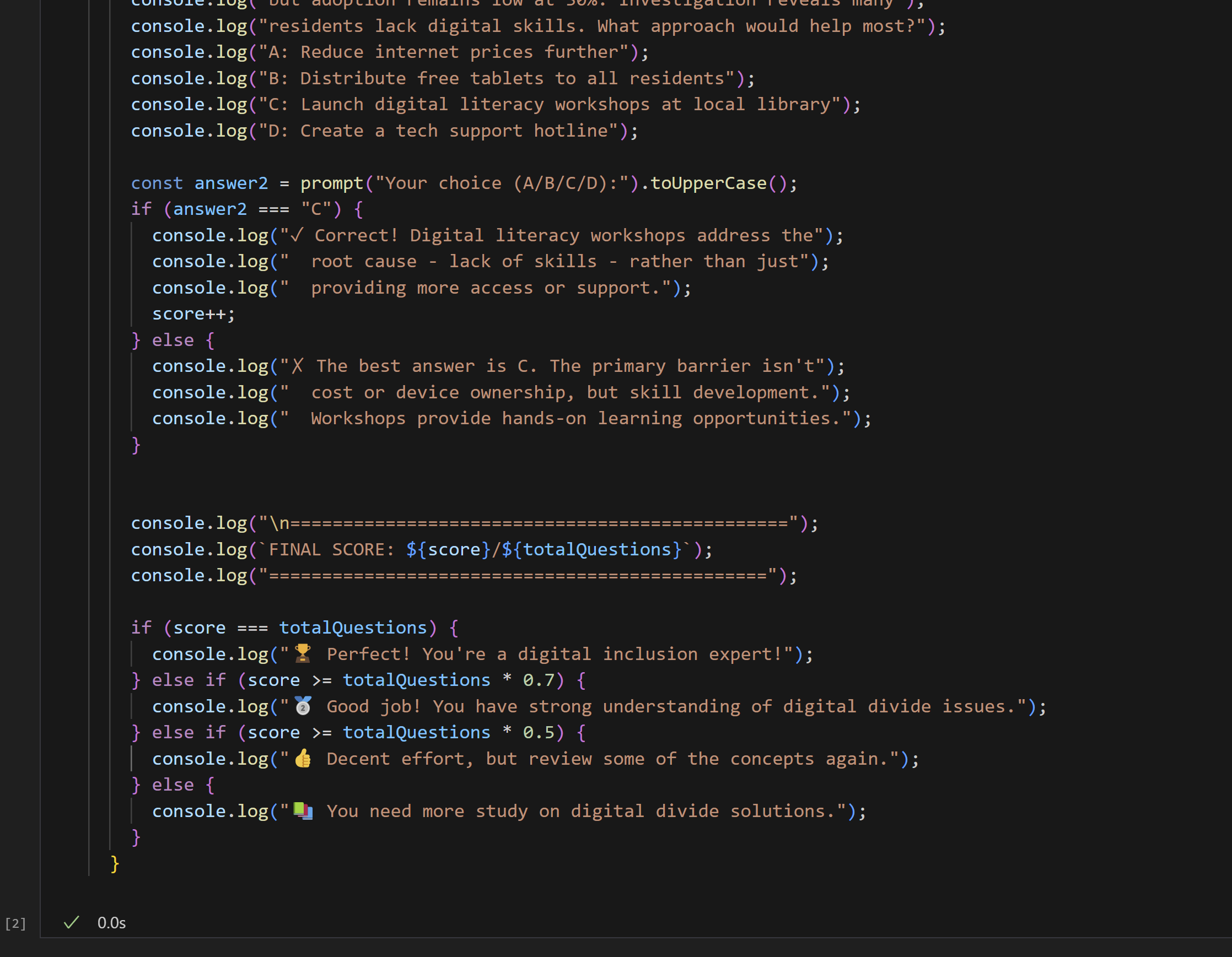
    if (answer2 === "C") {
      console.log("✓ Correct! Digital literacy workshops address the");
      console.log("  root cause - lack of skills - rather than just");
      console.log("  providing more access or support.");
      score++;
    } else {
      console.log("✗ The best answer is C. The primary barrier isn't");
      console.log("  cost or device ownership, but skill development.");
      console.log("  Workshops provide hands-on learning opportunities.");
    }


    console.log("\n===============================================");
    console.log(`FINAL SCORE: ${score}/${totalQuestions}`);
    console.log("===============================================");

    if (score === totalQuestions) {
      console.log("🏆 Perfect! You're a digital inclusion expert!");
    } else if (score >= totalQuestions * 0.7) {
      console.log("🥈 Good job! You have strong understanding of digital divide issues.");
    } else if (score >= totalQuestions * 0.5) {
      console.log("👍 Decent effort, but review some of the concepts again.");
    } else {
      console.log("📚 You need more study on digital divide solutions.");
    }
  }
<IPython.core.display.Javascript object>

Describe three dimensions of the digital divide and explain how each affects access to educational resources. Provide specific examples. Students without laptops or tablets can’t fully participate in digital learning. Many low-income families share one device among several children. This limits learning time and reduces engagement in schoolwork. Without reliable internet, students struggle to attend virtual classes or submit assignments. Rural areas often lack broadband access altogether. This creates major barriers to consistent learning. Students need basic tech skills to use learning platforms and complete online tasks. Some lack experience navigating tools like Google Classroom or Zoom. This slows learning and increases frustration.
Compare and contrast the digital divide challenges faced in urban versus rural communities. What solutions might be effective in each context?
- Urban areas often have available internet infrastructure but face affordability issues, while rural areas lack reliable internet access altogether. Urban students may live near Wi-Fi but still lack subscriptions or enough devices.
Analyze how the COVID-19 pandemic exposed and potentially exacerbated existing digital divides. Include at least three specific examples.
- The pandemic highlighted gaps in device access, internet availability, and tech support at home. Students in low-income and minority communities missed more school due to lack of digital tools.
** Statistics
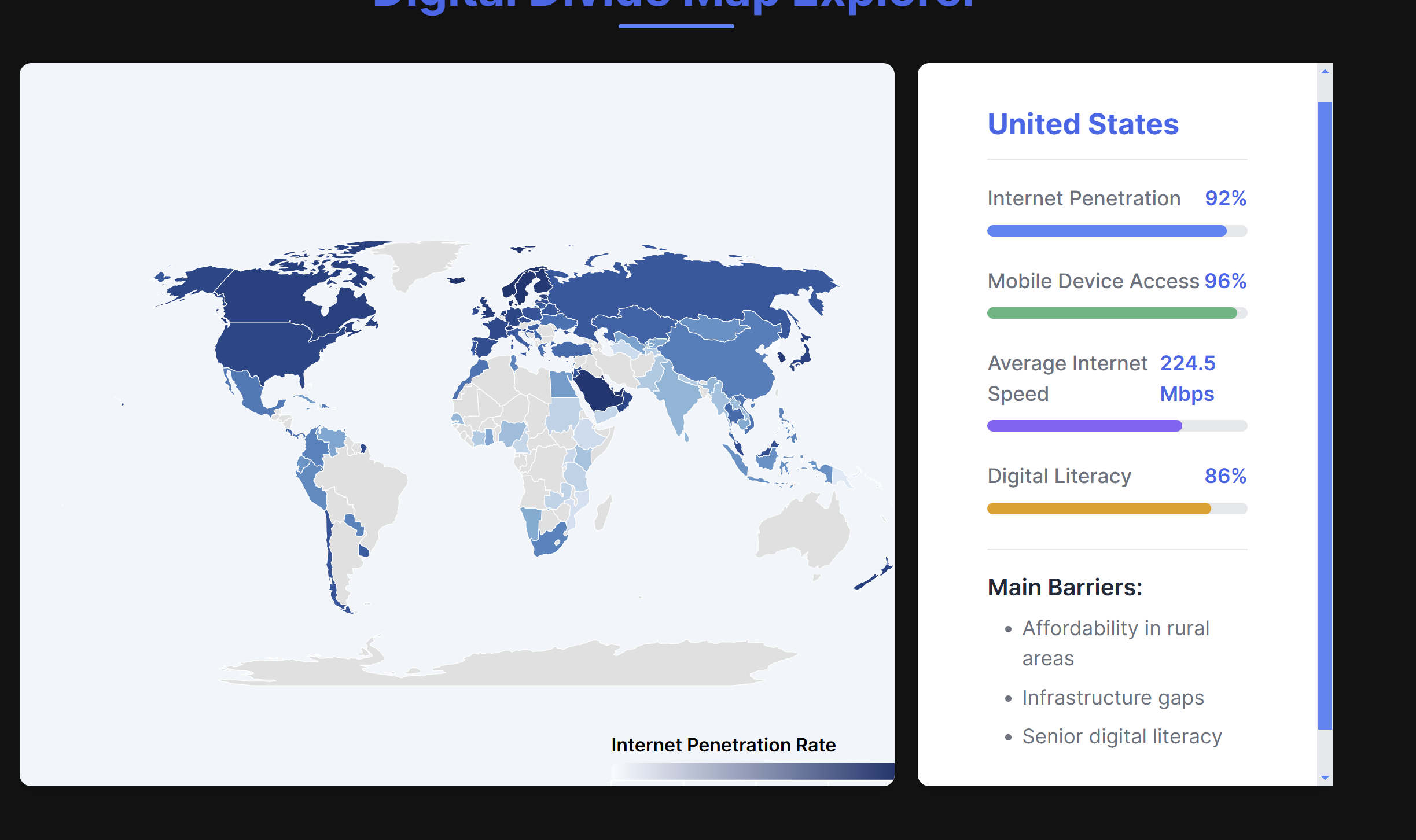
United States:
Internet Penetration: 92%
Mobile Device Access: 96%
Average Internet Speed: 224.5 Mbps
Digital Literacy: 86%
Barriers: Affordability in rural areas, infrastructure gaps, senior digital literacy
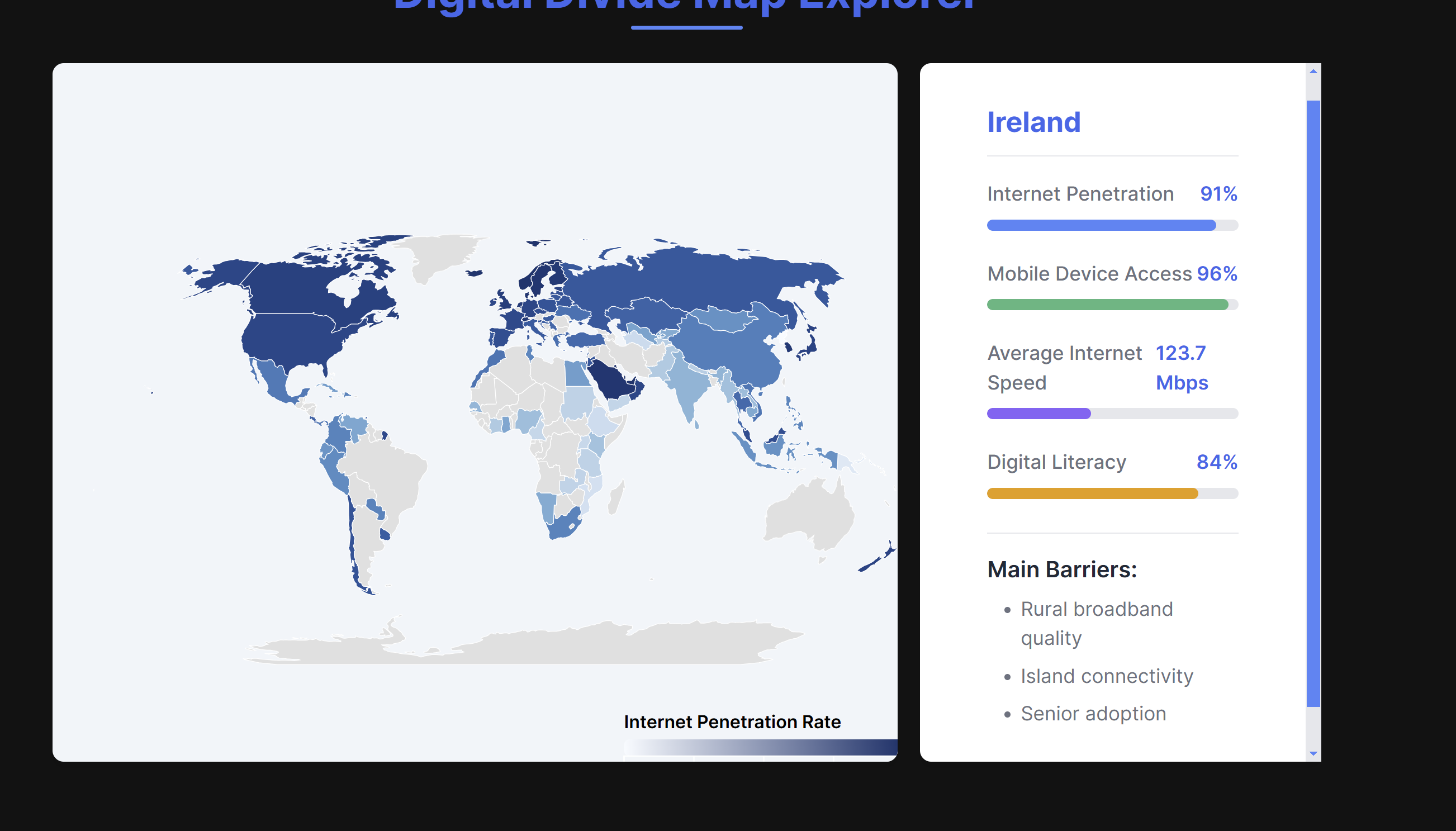
Ireland:
Internet Penetration: 91%
Mobile Device Access: 96%
Average Internet Speed: 123.7 Mbps
Digital Literacy: 84%
Barriers: Rural broadband quality, island connectivity, senior adoption
Digital Divide:
Average Internet Speed — USA (224.5 Mbps) vs. Ireland (123.7 Mbps)
Ireland: The significantly slower internet speed in Ireland could:
-
Limit opportunities for remote work or online learning, especially in rural areas
-
Slow down innovation in tech-based sectors like digital startups or telemedicine
-
Create a gap in access to real-time services such as cloud-based software, online gaming, and video conferencing
-
Make it harder for students to participate in interactive or high-bandwidth educational resources
Solution: To improve broadband infrastructure, Ireland could:
-
Partner with tech companies for infrastructure development (e.g., public-private partnerships with ISPs)
-
Implement community Wi-Fi initiatives in underserved areas, especially remote islands