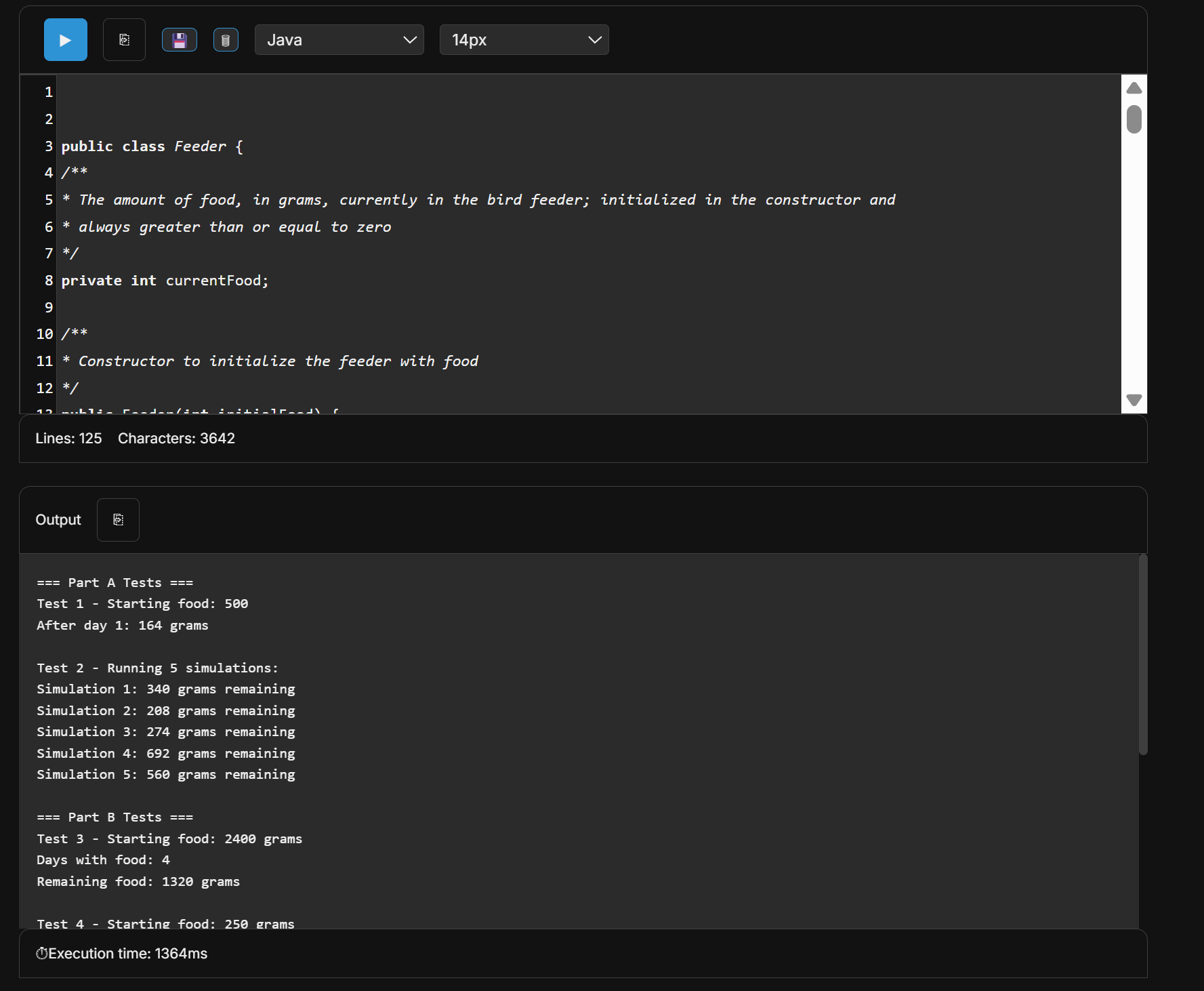
// CODE_RUNNER: BirdProblemA (modified).

public class Feeder
{
    // Tracks how much food is currently in the feeder
    private int foodRemaining;

    /**
     * Simulates one day at the bird feeder.
     * A bear may visit, or birds may eat food.
     * Precondition: birds > 0
     */
    public void simulateOneDay(int birds)
    {
        double rand = Math.random();

        // Bear visits with a 5% probability
        if (rand <= 0.05)
        {
            foodRemaining = 0;
            return;
        }

        int gramsEach = (int)(Math.random() * 41) + 10; // 10–50 grams
        int eaten = birds * gramsEach;

        if (eaten >= foodRemaining)
        {
            foodRemaining = 0;
        }
        else
        {
            foodRemaining -= eaten;
        }
    }

    /* Other constructors, variables, or methods may exist */
}

public class Main
{
    public static void main(String[] args)
    {
        Feeder feeder = new Feeder();

        // Initialize feeder with food
        feeder.foodRemaining = 500;

        System.out.println("Starting food: " + feeder.foodRemaining);

        feeder.simulateOneDay(12);

        System.out.println("Food after one day: " + feeder.foodRemaining);
    }
}

Main.main(null);
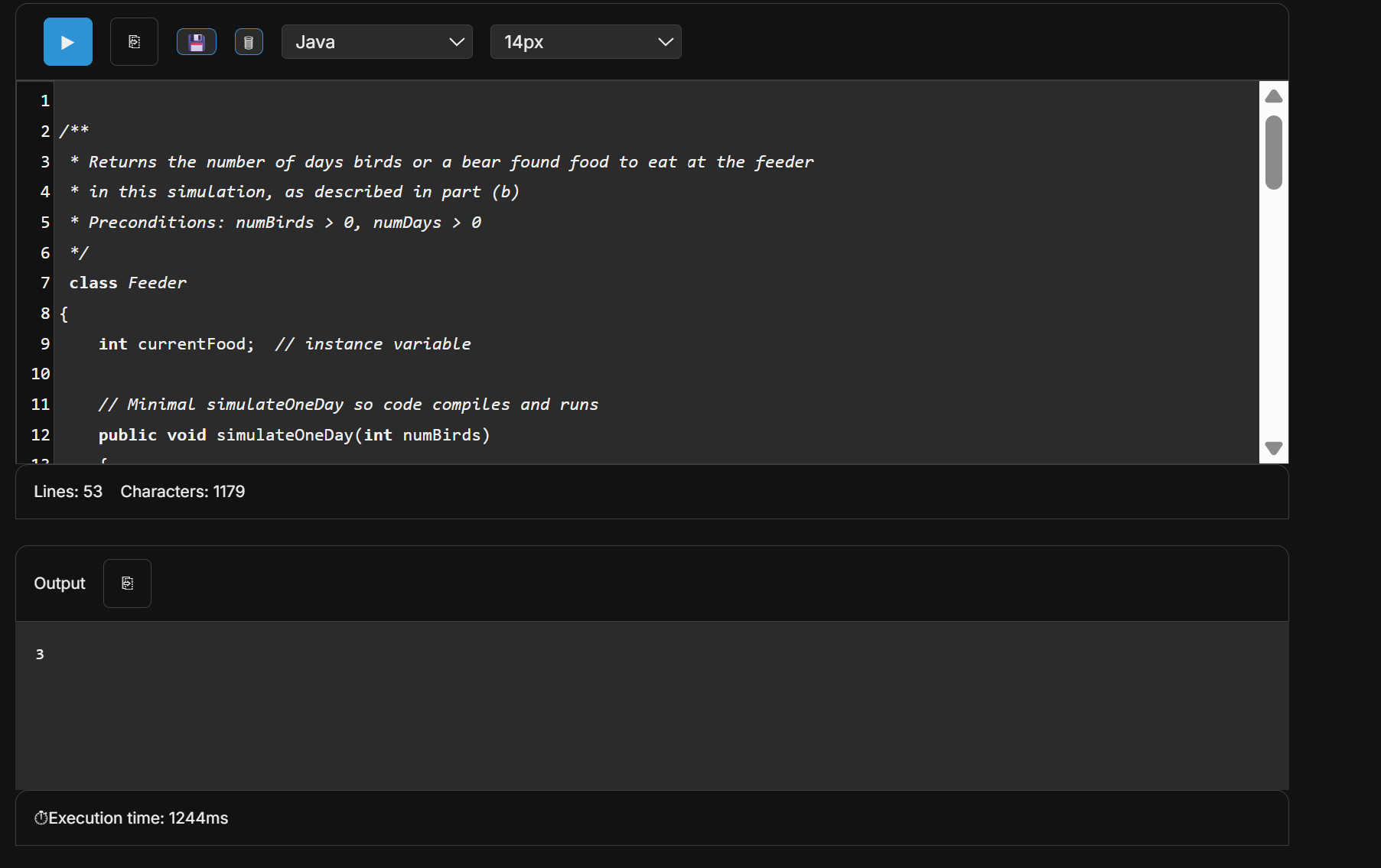
// CODE_RUNNER: BirdProblemB (modified)

/**
 * Simulates multiple days at a bird feeder and returns
 * the number of days food was available.
 * Preconditions: birds > 0, days > 0
 */
public class Feeder
{
    int foodLeft;   // instance variable

    // Minimal version so the program runs
    public void simulateOneDay(int birds)
    {
        int consumed = birds * 10;
        foodLeft = Math.max(0, foodLeft - consumed);
    }

    public int simulateManyDays(int birds, int days)
    {
        int count = 0;

        for (int i = 0; i < days; i++)
        {
            if (foodLeft <= 0)
            {
                break;
            }

            count++;
            simulateOneDay(birds);
        }

        return count;
    }

    /* Other instance variables and methods not shown */
}

public class Main
{
    public static void main(String[] args)
    {
        Feeder feeder = new Feeder();
        feeder.foodLeft = 50;   // initial food amount

        int daysFed = feeder.simulateManyDays(2, 10);

        System.out.println(daysFed); // Expected output: 3
    }
}

Main.main(null);
Things I Learned
- I learned how to use instance variables to track food levels across multiple days and maintain the object’s state throughout the simulation.
- I learned how conditional logic models different outcomes, such as birds eating daily or a bear visiting occasionally, and how those conditions affect the flow of the program.
- I learned how loops can simulate repeated events over time and allow the program to automatically update values day by day.
- I learned how helper methods allow complex simulations to be broken into manageable parts, making the code more organized and easier to debug.
- I learned how to think step-by-step when designing a simulation so that each event happens in the correct order.
- I learned how small changes in logic can significantly impact the final result of a program.
- I learned how to test edge cases, such as when food is almost gone, to ensure the simulation behaves correctly.
Things I Struggled With
- I struggled with knowing when to stop the simulation once food ran out and ensuring the loop condition reflected that correctly.
- I struggled with correctly updating the food amount after each day without accidentally subtracting too much or too little.
- I struggled with tracing how values changed inside a loop, especially when multiple conditions were involved.
- I struggled with small logic errors that affected the final day count, even when the code seemed mostly correct.
- I struggled with debugging because sometimes the output was slightly off, making it hard to identify exactly where the mistake occurred.